Praise God! We’re celebrating 20 years of ministry! Join Kevin as he commemorates this major milestone, while also reflecting on the important work and message of Perfect Word. Plus, you don’t want to miss his special SURPRISE GUESTS! Come join us!
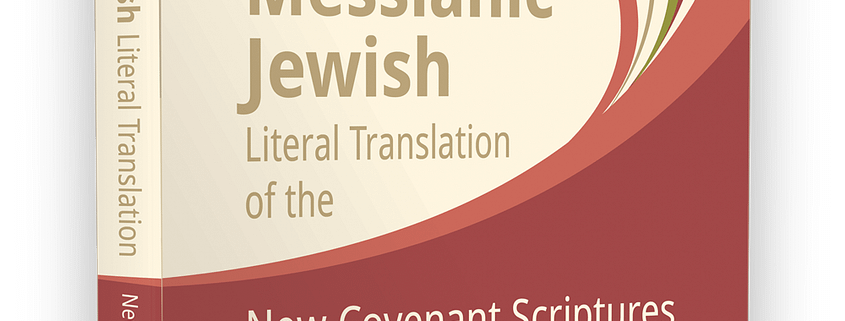
For all who “desire the word’s pure milk,” introducing the brand new, refreshing and vibrant translation of the Scriptures that preserves the Word and restores its Jewishness. Based on the groundbreaking Young’s Literal Translation (YLT), this exhaustive update and re-rendering by Messianic Jewish author and teacher Kevin Geoffrey not only provides a reliable 21st century literal translation of the text, but also further restores the true, Messianic Jewish perspective of Scripture. Visit https://www.mjlt.org/ to learn more, order order your copy today!
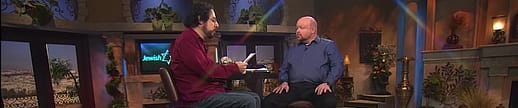
During the week of September 22, 2014, Jewish Voice with Jonathan Bernis aired an interview with Kevin about Bearing the Standard.
In case you missed it, you can view the episode in its entirety here. Please comment beneath the video and let us know what you think!
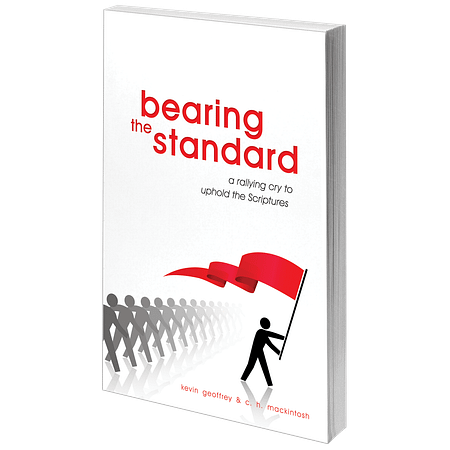
I am both humbled and excited that after nearly two years of almost continuous research, writing, soul-searching and God-seeking, by brand new book is finally available. Bearing the Standard: A Rallying Cry to Uphold the Scriptures is my life-message—indeed, it is the single most important thing I have ever written (or may ever write).
When I began working on Bearing the Standard, I had intended it to be only an eight-page pamphlet at most! Now, at more than 180 pages, it represents the beginning of a major Initiative within Perfect Word that I will be pouring myself into for years to come. The message of Bearing the Standard is not only foundational to every other resource by Perfect Word, it is foundational to the faith of every true believer in Yeshua. Simply put, if you and I do not bear the same standard, we do not share the same faith. God’s Word, encoded and archived for us in the Scriptures, is that one, true, reliable standard.
For a long time during the production of this work, I was concerned that I would be the only one who thought this would be an important, trajectory-altering message for the Body of Messiah—that I was making a whole lot of noise about nothing. But my confidence was greatly renewed when Promise Keepers president and CEO Dr. Raleigh Washington graciously agreed to read the manuscript of Bearing the Standard, and replied with the following endorsement:
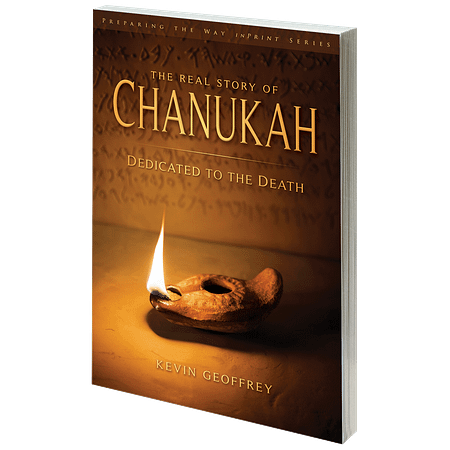
When I was a boy, one of the only Jewish holidays my family celebrated was Chanukah (the other was Passover), but if you had told me that one day I would write an entire book about the Festival of Lights, I would have said you were a couple of candles short of a menorah! Now all these years later, I’m delighted about the newly released “Real Story of Chanukah,” because it truly puts the modern holiday in perspective by placing it against the backdrop of its factual history.
But what really excites me about the new book is that its message is so Messianic… not because it shows you Yeshua in the chanukiyyah, but because the real story of Chanukah is about being completely sold-out, zealous, crazy-on-fire—dedicated—to Adonai. I love this kind of message!
In The Real Story of Chanukah (which quotes at length from the apocryphal, yet historically reliable books of 1&2 Maccabees), we get to witness the struggles of a handful of average, everyday Jewish people during the intertestamental period. Against the overwhelming anti-Semitic and assimilating forces of their day, we see these valiant, devout few as they fight for the God and the Torah they love, in order to restore Israel to faithful fellowship with God. The story is just incredible—it’s vivid, moving, and, at times, almost beyond belief. And it’s within this context that I was able to unpack the Messianic message, illustrating how, according to the Scriptures, we too can and must be completely dedicated to the cause of Yeshua.

We are very excited to announce the release of the newly revised (and hopefully final!) edition of Behold the Lamb, a Scripture-based Haggadah for a modern, Messianic Passover memorial ‘avodah (Hebrew for “service”, “rite”, or “ceremony”).
The Passover experience facilitated by Behold the Lamb is an uncommon, untraditional departure from the usual Passover seder, set apart by its unique and unapologetic use of Scripture—approximately ninety percent of the Behold the Lamb Haggadah is nothing more than a compilation of relevant passages from the Word… and nothing tells a story better than Scripture!
In addition to the groundbreaking Haggadah, Behold the Lamb also includes a 20+ page supplementary section containing recipes for delicious homemade matzah, an introduction to our unconventional children’s crafts, and pages of brand new teaching material on Passover topics that we have never seen treated in any other publication, Messianic or otherwise.
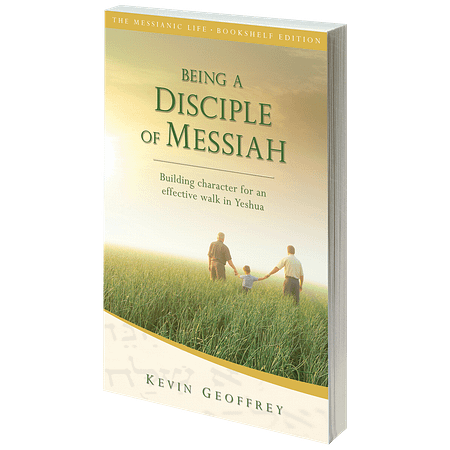
In 2007, we published the Discipleship Edition of Being a Disciple of Messiah: Building Character for an effective walk in Yeshua, and it has since been used by many home groups, bible studies, for leadership training, youth groups and more. We realized, however, that not everyone is able to make use of a book that has a workbook format, so we decided to add the Bookshelf Edition to the Messianic Life lineup. The Bookshelf Edition, published in November 2009, contains the same material as the Discipleship Edition; the difference is that the Bookshelf version does not have the workbook questions and activities, and the book itself is a smaller size—more suitable for your bookshelf.
About the importance of discipleship, Kevin says, “Many of us really have no clue what discipleship is all about. We vaguely think it has something to do with evangelism, or perhaps taking a class on the foundations of the faith. But real discipleship—true discipleship—is what the Master exemplified for us. He called people to follow Him and be like Him. If we’re truly living for God—and even if we’re struggling with it, but faithfully trying—we have something to offer those who don’t yet know Him, and those who need to know Him more. I love this book because it hits at core topics that every believer in Yeshua needs to have settled in their lives. These topics are linch-pins in our walk with the Master, and we need to get these down—get these solid, deep within us—if we ever hope to be productive servants in God’s Reign. I promise two things from this book: one, you will be lovingly, but firmly challenged; and two, you will be encouraged to be the complete, whole and effective disciple that you have already been remade to be!”
Click here to learn more about Being a Disciple of Messiah.
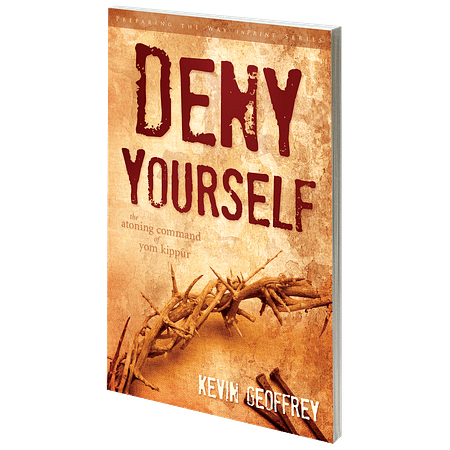
On August 24, 2009, we published our sixth book, the first in our new Preparing the Way InPrint series, Deny Yourself: The Atoning Command of Yom Kippur.
When asked why he wanted to write this brief work about Yom Kippur, Kevin responded, “‘Deny Yourself’ is not just about making meaningful, practical application for the holiest day of the year. This is what the Master told us to do: deny ourselves. In order to serve Yeshua, we have to stop existing–we need to supercede all our wants, desires and needs, and completely replace them with the Master’s instructions. In 2009–and it’s been this way for a long, long time–the Body of Messiah is a cultured, civilized, domesticated religion. It’s all about us and what we can get from God. The message of ‘Deny Yourself’ is the message of Scripture: it’s not about us at all–it’s about emptying ourselves just like Yeshua did and unselfishly serving God and everyone else.”
To learn more about Deny Yourself, or to order your copy, please visit https://denyyourself.perfectword.org/.
 I am presently working on the the follow-up book in The Messianic Life Discipleship Series, “Growing the Fruit of the Spirit.” This new book, along with its complementary Facilitator’s Guide, is tentatively rescheduled for release in 2012.
I am also adding more works in the Preparing The Way “inPrint” Series, which features written versions of some of my teachings that are presently only available in recorded audio format. The next book in the series is Giving Adonai His Due, a Messianic Jewish look at living a lifestyle of Praise and Worship. This title is in line for publishing also in 2012.
Also on the drawing board is my fourth devotional book, the Messianic Shabbat Devotional, though there is no publication date at this time. On August 31, 2008, Perfect Word released my third devotional book, the Messianic Torah Devotional.
 January 20, 2009, Phoenix, AZ. Kevin appeared as a guest on Jewish Voice Today with Jonathan Bernis to give his testimony about how he came to faith in Yeshua, and to talk about discipleship and daily devotion to God. Filmed before a live studio audience, the show originally aired the week of February 22, 2009.